Current Research
Europa Environment Chamber
Developing a testing chamber to simulate the thermal environment of Europa halfway through its ice crust (193K). The chamber will hold a large amount of ice and then a copper probe will melt through the ice. This probe will be tested with various nose shapes and heating profiles to find the most efficient and fastest way to descend through the ice.
Team: Amelia Brumfield (Florida Tech, Ph.D. student), Andrew Dean (UCF M.S. student), Sarah McGovern (Florida Tech B.S. student), Dan Kirk (Florida Tech Professor)

Lunar Power
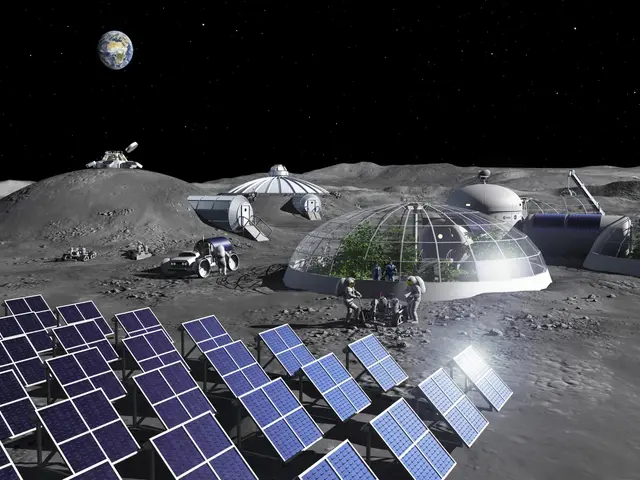
Modeling power requirements of scalable lunar bases using molten salt fission reactors as the power source. The model will give the required electrical power and thermal energy storage for a given mission depending on factors like crew size and mission duration.
Team: Andrew Dean (UCF M.S. student), Micah Boudreau (UCF M.S. student), Juliette Pimbert (UCF B.S. student), CATER Lab
High Fidelity Orbital Modeling Using Physics-Informed Neural Networks
Utilizing Phyiscs-Informed Neural Networks (PINNs) to model orbits in dynamically interesting environments within the Solar System. These models would enable more complex mission designs including swarms, where the communication delay is detrimental to the mission. Damped Pendulums provide simplified orbital models to validate PINNs as complexity is increased. Eventual trained PINN could be applied to Guidance, Navigation, and Control, or used as an instrument to measure gravitational anomalies around planetary bodies.
Team: Meagan Thatcher (UCF Ph.D. student), Nicolas Araya (UCF B.S. student), Sebastian Munera (UCF B.S. student)

Lunar Dust Attenuation
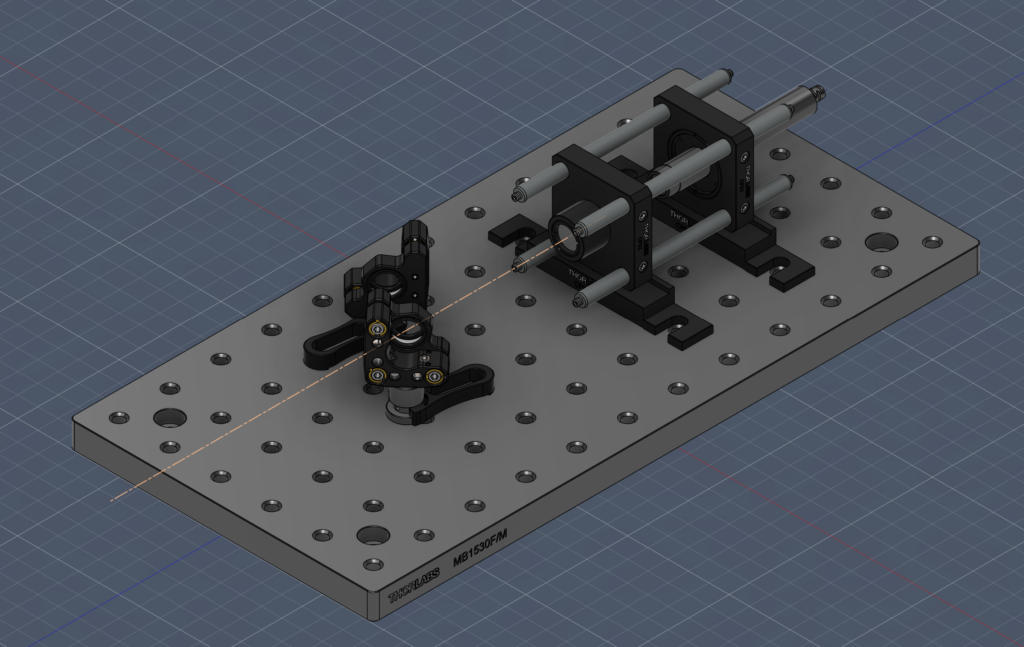
Characterizing how lunar regolith attenuates laser beams. Lunar dust has unique features that are not present in terrestrial dust which may more negatively impact laser transmission. During the Lunabotics competition in May 2026, hardware will be deployed which will measure power loss as the rovers kick up dust and regolith. This research will characterize potential impacts on future lunar laser-based power delivery, communications, and scientific instruments.
Team: Owen Baylor (UCF M.S. student)
High Altitude Balloon Test for Deployable Structure
Design and flight testing of a deployable structure with a mechanism for proof-of concept and data collection. The flight test will occur by August 2026 and fly on a high-altitude balloon out of central Florida. The data collected and the concept are to be utilized for applications such as the wing of a UAV for Uranus exploration and other applications to be noted.
Team: Isabelle Kaltenbaugh (UCF Ph.D. student), Sofia Bode (UCF B.S. student), Chloe Greenbaum (UCF B.S. student), Grante Kramer (UCF B.S. student)
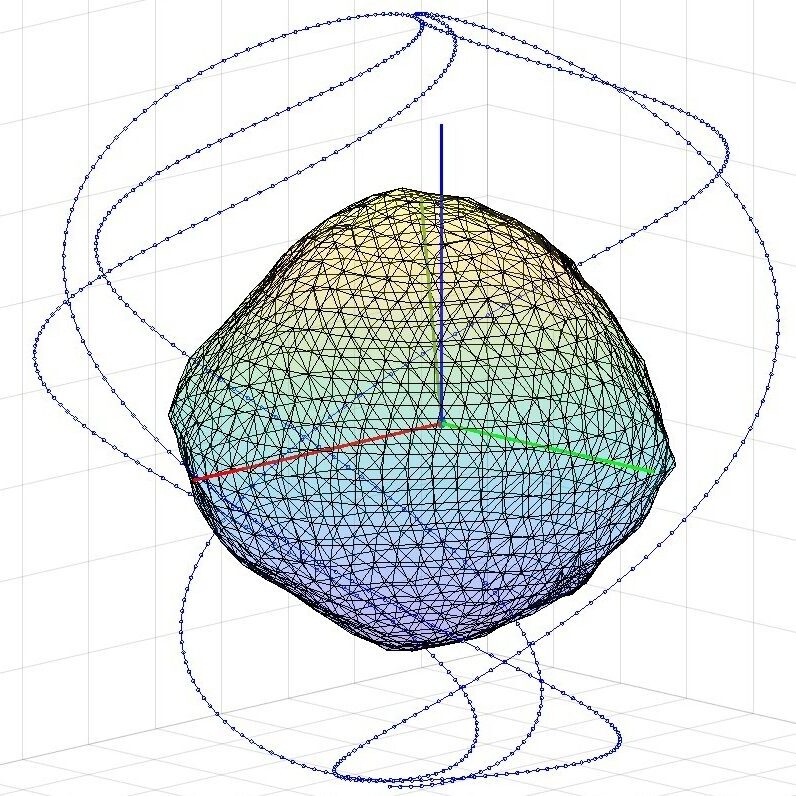
Modeling Orbital Paths Around Irregular Bodies
The gravitational modeling of irregular shaped bodies such as asteroids poses significant challenges for space missions that may visit the bodies. Due to the irregular mass distribution and non-spherical shape, the gravitational field follows highly non-uniform trends that make the spacecraft trajectory difficult to predict. Utilizing methods like the Polyhedral Method and Spherical Harmonics, trajectory modeling of spacecraft can be more reliable and deterministic that enable close-flyby or landing missions. This project explores gravitational modeling techniques to assist in mission design processes where body shape itself is an input.
Team: Micah Boudreau (UCF M.S. student), Ossyris Bury (UCF B.S. student)
Simulation Modeling for Dragonfly Heat Shield Release
Researching the phenomenon of heat shield separation. Using the NASA Dragonfly mission to Saturn’s moon Titan as a case study. The goal of the work is to develop a reduced order model for heat shield separation that can be used in large system models that would aid in the development of digital twins or similar large scale models of complete spacecraft.
Team: Edward Clutter (UCF Ph.D. candidate)
A Fixed-Wing UAV Concept for Long-Duration In-Situ Exploration of Uranus
Investigating the feasibility of a fixed-wing UAV for long-duration atmospheric exploration of Uranus. The research focuses on how aerodynamic design, CFD-informed performance, and environmental uncertainty affect sustained flight in the dense, hydrogen-rich Uranian atmosphere. A major emphasis is the integrated mission architecture linking a relay orbiter, a deployed probe, and the UAV so the overall system can support science operations, navigation, and communications. The work also examines power and energy concepts, including radioisotope-powered flight and hybrid buoyant–aerodynamic strategies, to determine what enables multi-day or multi-week operation. Overall, the goal is to develop a realistic framework for using a fixed-wing aerial vehicle as a new platform for Ice Giant exploration.
Team: Kevin Johnson (UCF Ph.D. student)